

Bit of a pure writing, thinking post this week - let me know if you want more or less of these types of newsletters.
When we watch a film, all the thousands of decisions, the vast quantities of time, thought and human ingenuity disappear into something that feels effortless. All we, the audience, are focused on is exactly what we should be focused on, the story and characters in that story.
Please enjoy
Bry
“Anyone who has ever been privileged to direct a film also knows that, although it can be like trying to write ‘War and Peace’ in a bumper car in an amusement park, when you finally get it right, there are not many joys in life that can equal the feeling.” Stanley Kubrick
“To make a film is very, very hard. To make a good film is an almost impossible task.” Steven Spielberg
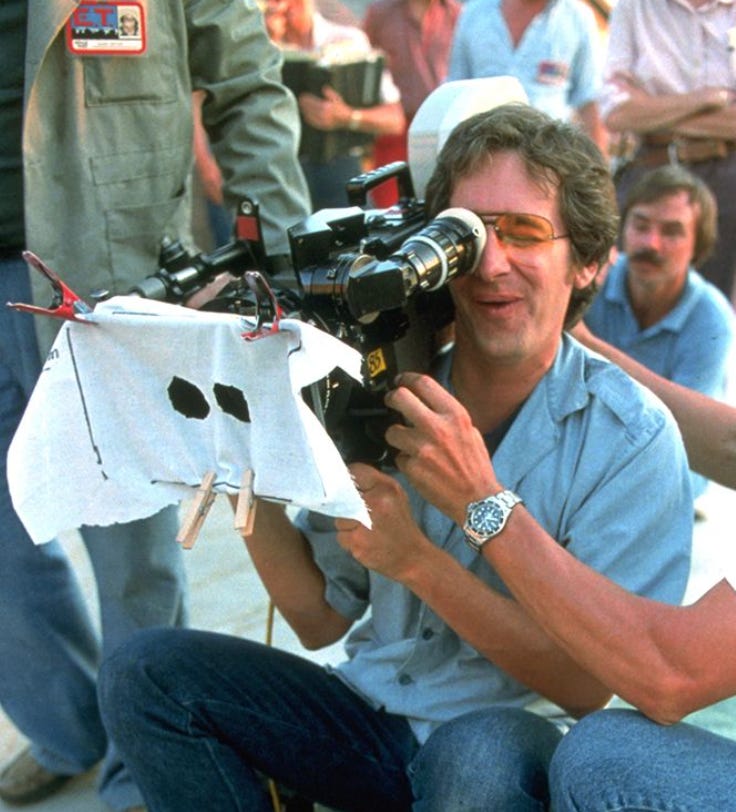
Two of the greatest filmmakers of all time, acknowledging how difficult it is even to make a ‘bad’ film. Which goes back to the word miracle in the title. Every film is a combination of thousands of decisions, by hundreds of people, over the course of a couple of years [usually] and all of this shepherded by the director - who at the end of the day is just human. And that’s just a very general overview. Starting with the germ of the idea, the writer or writer / director - has to have the thought in the first place. Or be open to the idea arriving if you subscribe to that way of thinking. Then, they have to give it enough time to form into something even semi-coherent. Then they have to be excited enough about it, to pour hundreds or thousands of hours getting it to a draft where the studio, and everyone behind it, is happy enough to go for it. That process alone involves convincing a whole slew of people that this thing your mind invented is worth their time and money. And if it’s an expensive film, it’s worth the huge investment that it may or may not return. Filmmaking is a financially very risky investment - but with great risks come great rewards and all that.
So now, they’ve managed all of that process and next comes pre-prod. All the key people involved have to be available, they have to be keen on the project, and by some strange alchemy all their collective contributions formulate into the essence of what this film could be before any cameras roll. And all this collective work has to be in service of the vision of the director. They all have to be ‘in’ the same film as the saying goes. And if you’ve ever been in a meeting of more than 7 people, discussing anything - you can see how tricky this can be.
Ok, so at the end of pre-prod, we have all the actors, key above and below the line people on board and all singing from the same hymn sheet. Now into production.
Back when there weren’t 20 inch hi-def monitors showing you exactly what the digital cinema camera is seeing, you had to trust the DOP, the machinery and film stock immensely. Using a film, shot on film, as an example. Consider the ballet that almost every shot involves, let alone a technically challenging one. The light from the scene has to pass through a lens onto a strip of film moving at 24 frames per second [normally] and the light has to have been judged by the light meters and DOP to be strong enough to expose the image correctly to give the scene the desired look. Too dark and the actor’s performance is lost, too bright and it hasn’t got the mood they’re after. Now imagine John Knoll, shooting Braveheart. Mel Gibson is riding a horse across uneven terrain, towards camera in slow motion, and the entire shot is pin sharp. That means the camera department planned out the entire stretch of movement, putting focus marks onto the focus dials, and judging that they’ve nailed the focus off a less than sharp video feed, probably black and white in 1995. Add on top of that, the fact that all that has to function while the actor / actors deliver the desired performance. Not to mention any of the other departments, like sound, costume, make-up, art department. All these elements have to work together and any can make a take unusable.
Then once you’ve captured all these individual shots that ‘work,’ they have to stitch together into sequences that work, then these sequences have to stitch together into acts that work, then the acts stitch together to make the film. Each a kind of fractal of the overall film. The themes, story, all contained within each stage and building on top of one and another to deliver the story as first envisioned by the writer / director and hopefully better than they could have first conceived. And most importantly - to deliver emotionally - no matter what that emotion may be. It’s an almost impossible achievement to make any kind of film, let alone one that connects with audience at a huge scale. Film is a miracle and miracles require the almost blind faith of everyone involved, right from the beginning.
*Just a few announcements
This will be the last film newsletter until the New Year, but I will potentially share a little project I have been working on in the meantime so keep an eye out for that.
So thank you again, so much, for reading my thoughts over the past year, it’s been a privilege, as always, to do these. I wish you all a wonderful time over the next couple of weeks and a New Year where potential is realised and inner peace grows closer. Love you guys.
I think this is one of your best posts to date! I really enjoyed it. And excellent use of the word "fractal" by the way 👌
Fantastic article; looking forward to see where your work leads you in 2026! Have a wonderful X Mas and a happy new Year! X