

This is the second iteration of the new format. This week it’s about anaesthesia, light and sound, something that I’ve been fascinated by for a long time. I really hope you enjoy this one, I loved working on it. Please consider subscribing over on YouTube if you like it. Have some interesting ideas in the works for the next editions :).
Bry
View the film or read below or both! As before, I recommend the film version.
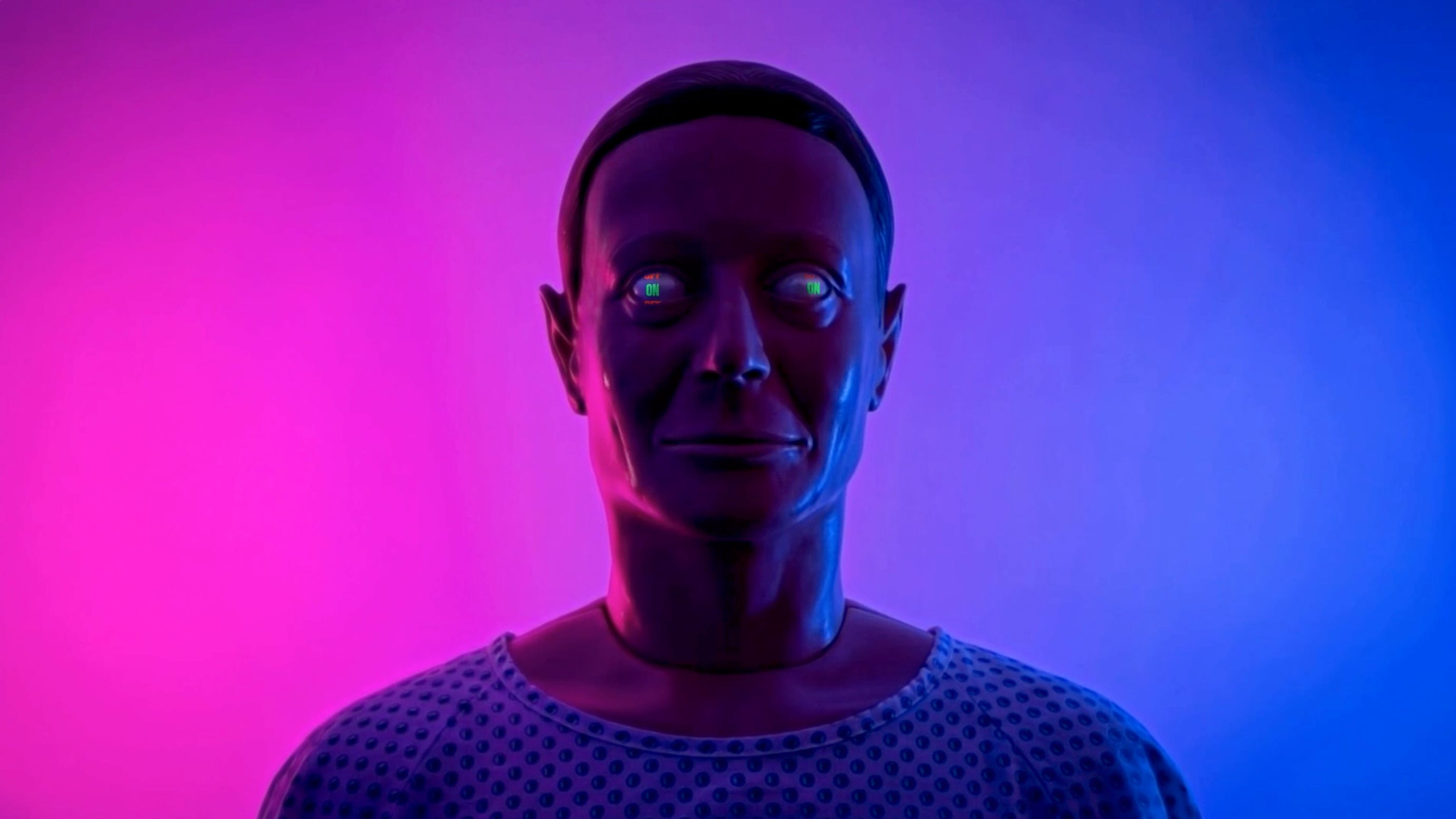
There is an invisible boundary between consciousness and unconsciousness. As slippery as it is mysterious. If we cross it, we go into a different state. The common way is to use a cocktail of anaesthetic drugs. But imagine if we could create an audio-visual experience so powerful, it could act as an anaesthetic.
History is dotted with wild methods to switch off consciousness. Or at least dull the pain of surgery. Dentists in the late 1950s, when anaesthetic drugs were common, performed teeth pulls. The only intervention: a mix of sound and music. They performed hundreds of extractions using this method. Patients were handed a control box which let them decide on music only, white noise, or a mix that they could decide. The patient was in control, and everything was delivered through stereophonic means, something not widely available at the time. Nine out of ten patients didn’t need any additional pain relief. Even one of the dentists, J.C.R. Licklider, sat in the chair himself to test the method. Side note: he went on to form part of the team at DARPA that would create the early internet. Looks like his early experiments into dulling the senses with media would prove helpful.
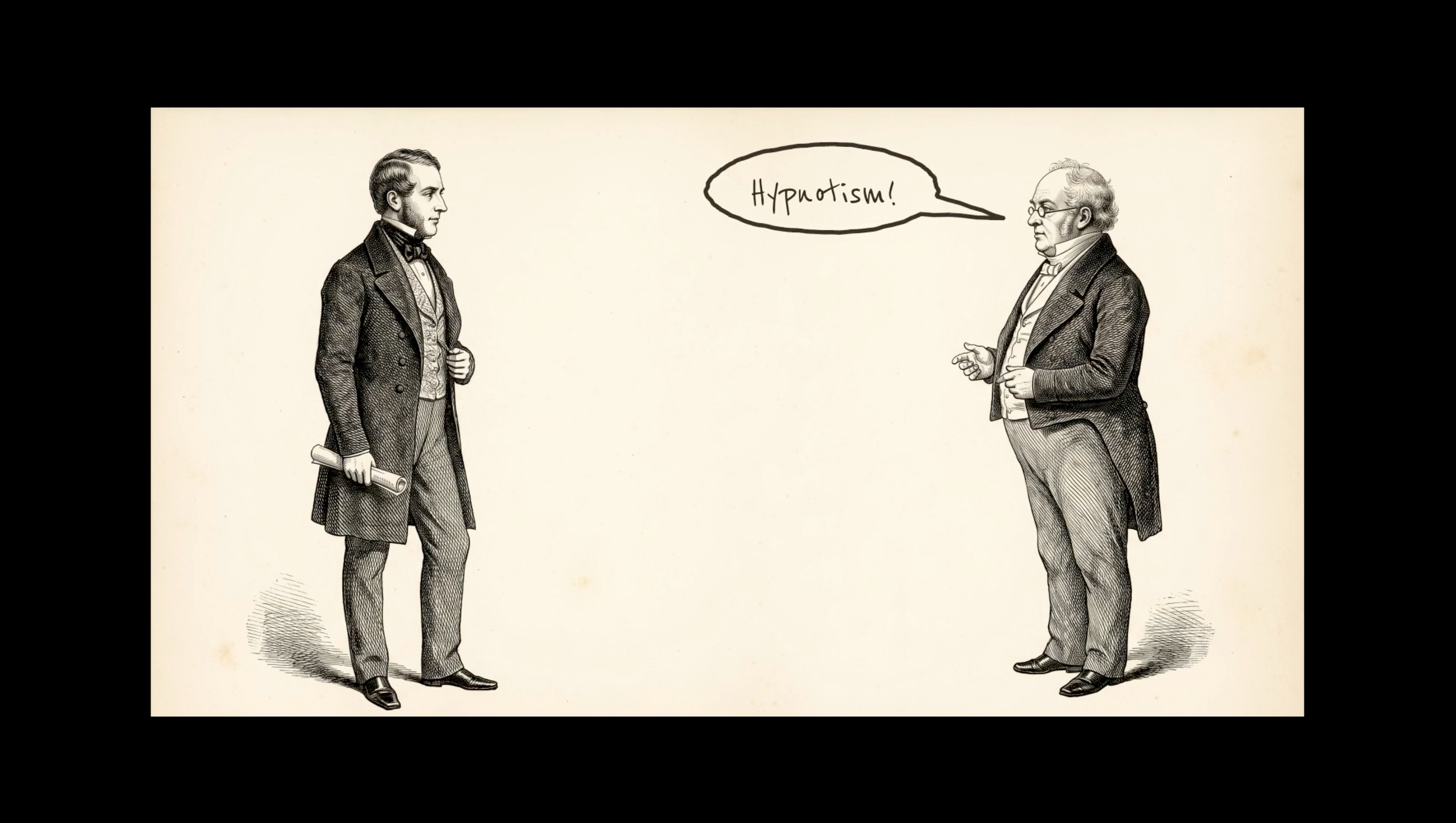
But back when there were no known anaesthetic drugs, people had to get creative, out of necessity. Mesmerism, which might now be known as “hypnotism,” was used by Esdaile, a Scottish surgeon in Calcutta, to carry out thousands of procedures on local people. Putting them “under” using nothing more than rhythmic hand passes and “blowing” over the patient’s body.
At the exact same time back in the UK, another Scottish surgeon, Braid, was using the same techniques but radically rebranded. He believed the effect came from focused attention and suggestion, not the direction of a magnetic fluid in the body, which was what mesmerism was based on. He called it neuro-hypnotism and based the idea strictly in psychology. Already, the idea of altering consciousness was shifting from “magic” to mind. But then, much to the chagrin of both docs, I imagine, the first anaesthetic drug intervention in the form of ether came knocking, and both practices were thrown out.
That was until… we are reminded just how loose a grasp we have on the nature of consciousness and our world at large. And just how much control we actually have. Another rebrand, but our friend “Esdaile” makes another reappearance. A patient named Daniel Gisler put himself into a deep trance state known as the “Esdaile state.” He induced it in himself via audio recording. Then proceeded to undergo surgery to have plates and screws removed from his lower leg after a tibia and fibula break. He had no other painkillers or anaesthesia. This man anaesthetised himself using nothing but an audio recording. And said the discomfort and pain was tolerable, and he’d do it again.
Using this research, along with other info, I’ve designed an audio-visual experience that might act as an anaesthesia. Enter the Ganzfeld effect.
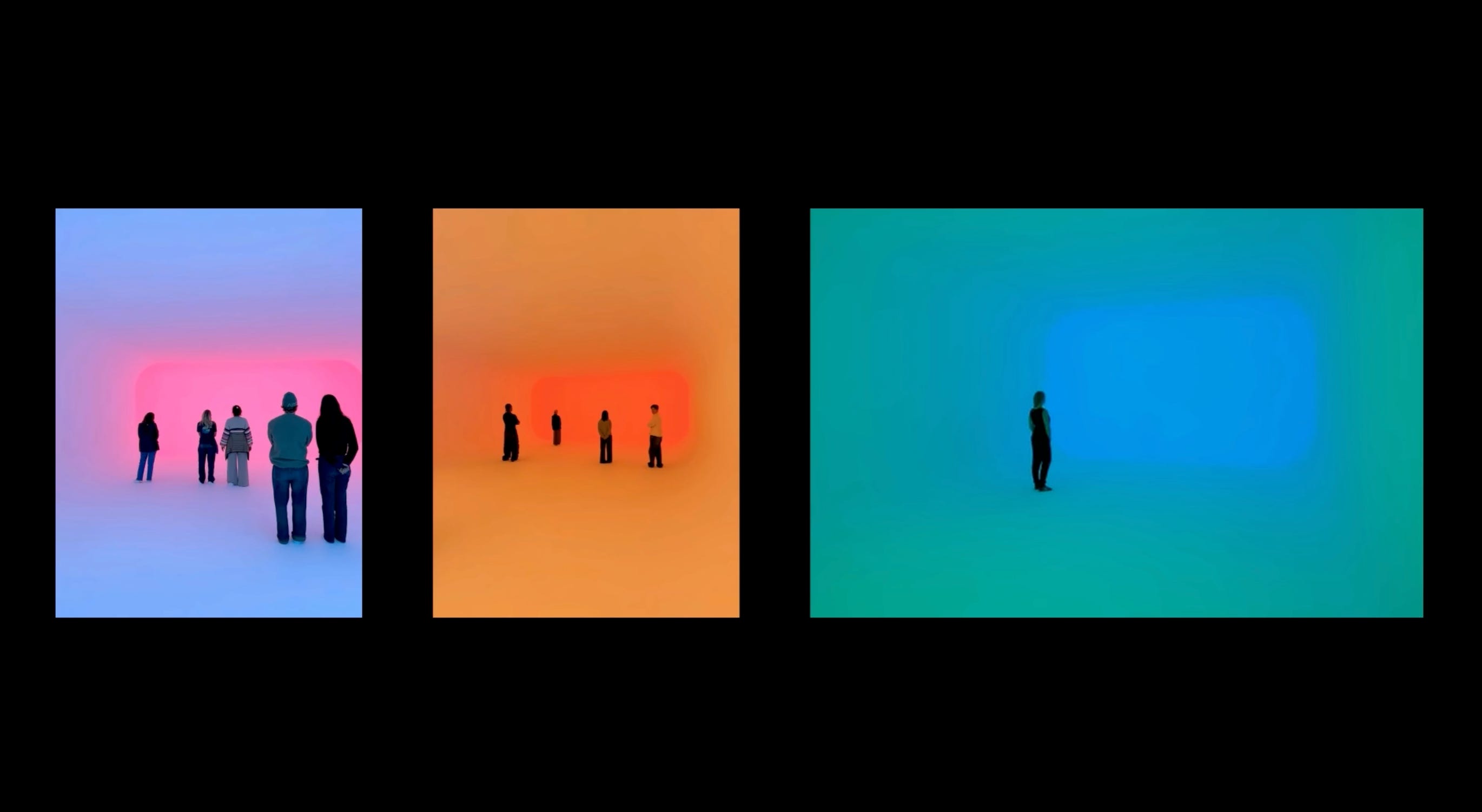
You’ll know part of this effect if you’re a fan, or just familiar with the artist James Turrell. He has a whole series called Ganzfeld Rooms, where the walls and form dissolve into pure colour. People have tripped and fallen over in them because of that lack of form. That’s important for my purposes.
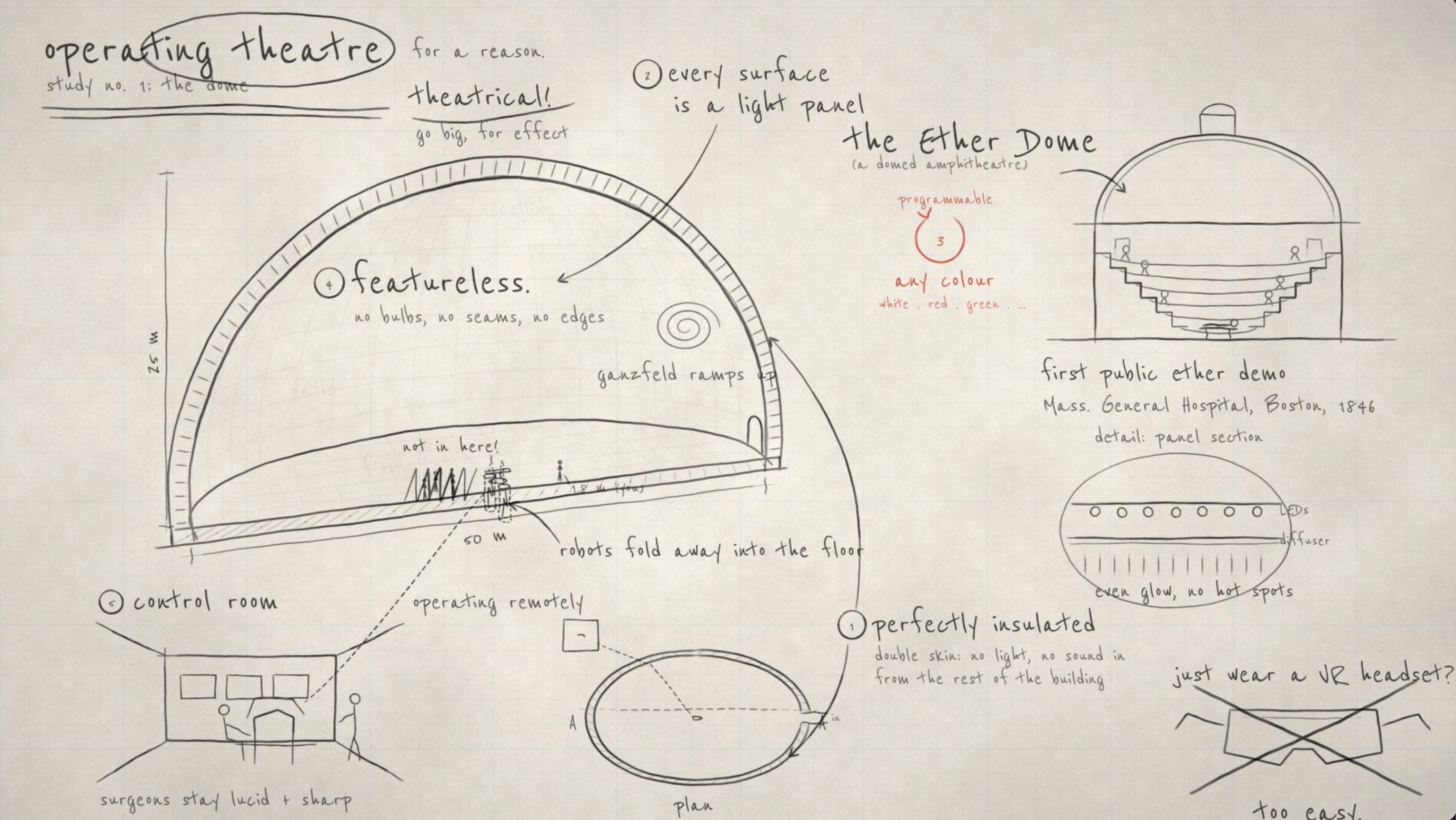
I’m imagining a vast domed room, 25m high, 50m long. Strangely enough, the first demonstration of ether took place in Massachusetts General Hospital in a domed amphitheatre now known as the Ether Dome. I’m imagine this space is perfectly insulated from the rest of the building. All the surfaces, walls, ceiling, floors, are light panels and can be programmed to cycle through any colour. The panels are diffused perfectly, so no individual bulb or seam stands out. For all intents and purposes, the entire room is featureless. When the effect fully ramps up, you’re not going to want your surgical team there. You want them lucid and sharp, so they’ll be in another room remotely operating the robot surgical system. Yes, I know this would be easier if the patient just wore a VR headset. But it’s called an operating theatre for a reason. So we’re going big for effect. The patient enters the main theatre. Here, they are briefed, reassured that they have nothing to worry about, and prepped by the team.
Framing is critical to success. The scale and design further reinforce that this is novel, this is new; on the edge. It must work. They lay on the table, and the effect begins. Slowly, the white walls fade away. Colour fills their vision: deep red. This has been known to cause the strongest “fade out effect.” Steady brown noise, the sound of a waterfall, surrounds them, like a cocoon of noise. It’s just above the ambient sound of the room. Slowly, the red shifts to green. This has been shown to create the largest calming effect, and speed up the perception of time passing. By this time, you’re lost in the Ganzfeld effect. Vision seems to “switch off” completely because of the brain registering an unchanging signal.
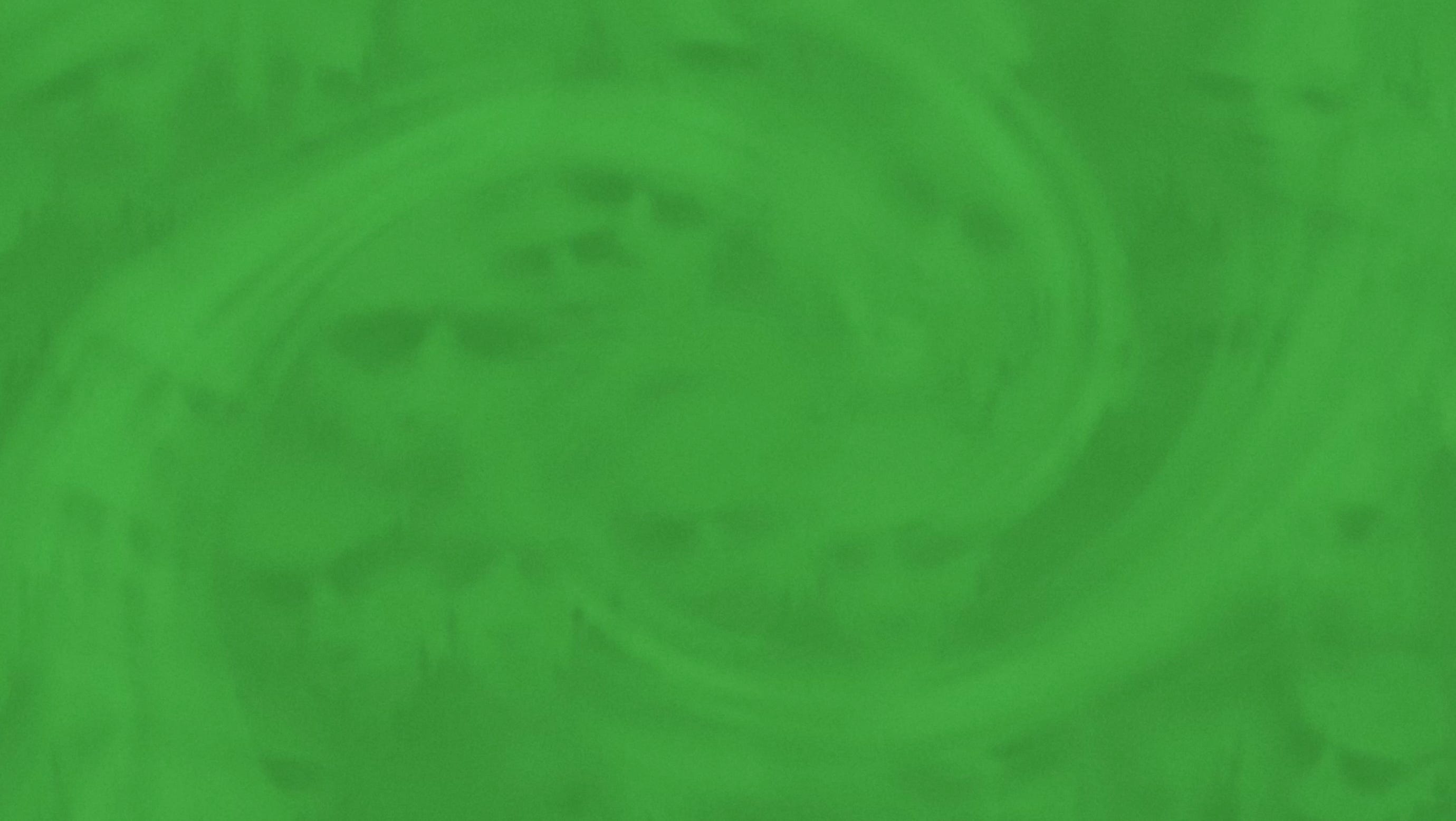
Geometric shapes fade up and down and animate in the featureless green. Water flowing, castles emerging from ocean waves, faces emerging and merging with the castle and waves. Sounds of voices. They’re deep in hallucinations now. The flicker effect would start here, a flicker of between 8–13 Hz, flashes per second, is shown to make all these effects stronger. Imagine this whole space flickering at that rate.
All of this has the effect I’m going for. It gradually disconnects the thalamus, the brain’s sensory relay station, from the cortex. Think of this as the cinema where the film of your life plays, where raw signals get rendered into the content of experience and the idea of “you” in it. That disconnection just also happens to be one of the leading explanations for how anaesthetic drugs switch consciousness off. We’re just getting there by a different road.
I love this quote:
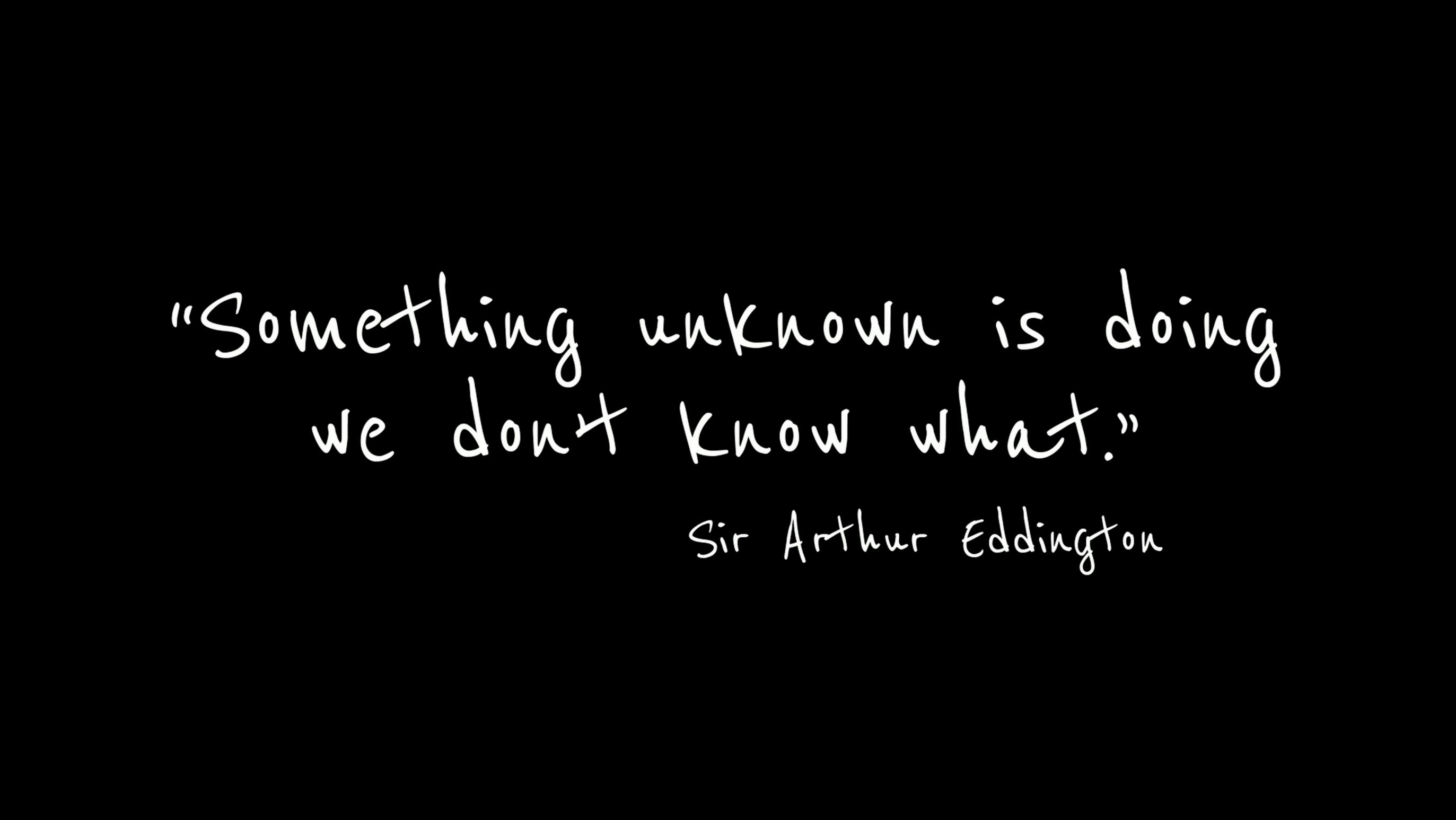
He was talking about quantum physics and the uncertainty principle. But I think it does a pretty good job at summing up the status of research into consciousness today. And therefore, the mystery of anaesthesia too. No one knows for certain what creates consciousness. And so, no one really knows why anaesthesia works. Yet millions of people go under every day, and we don’t know why. Part of the reason we can’t comprehend consciousness, or how to turn it off, is because we’re using consciousness to figure consciousness out. We can’t step outside of it to work on it from another angle. It’s the same consciousness that wrote this newsletter, that you’re using to read the newsletter, and so on, in a loop, round and round, like a circle in a spiral. Count back from 10 for me…
Hope you enjoyed and be well!
Films to enjoy in this vein:
Coma (1978), directed by Michael Crichton
The Cell (2000), directed by Tarsem Singh.
PS Don’t try at home.